Don't try to put Sarah Swett in a box—if you do, she might just weave a bag on it.
Growing up on the East Coast, Sarah found herself more enchanted with knitting sweaters from farm yarn than the traditional college track. She spent her young adulthood as a ranch hand and cook in Montana and Idaho, where she brought her yarn in by pack mule. She fell in love with the Palouse region of western Idaho for its rolling hills and agricultural bounty, settled there, and began to explore the possibilities of home. She is as inspired by the sweeping landscape as by the tiny discoveries of making cordage from milkweed and dandelion she finds in her garden.
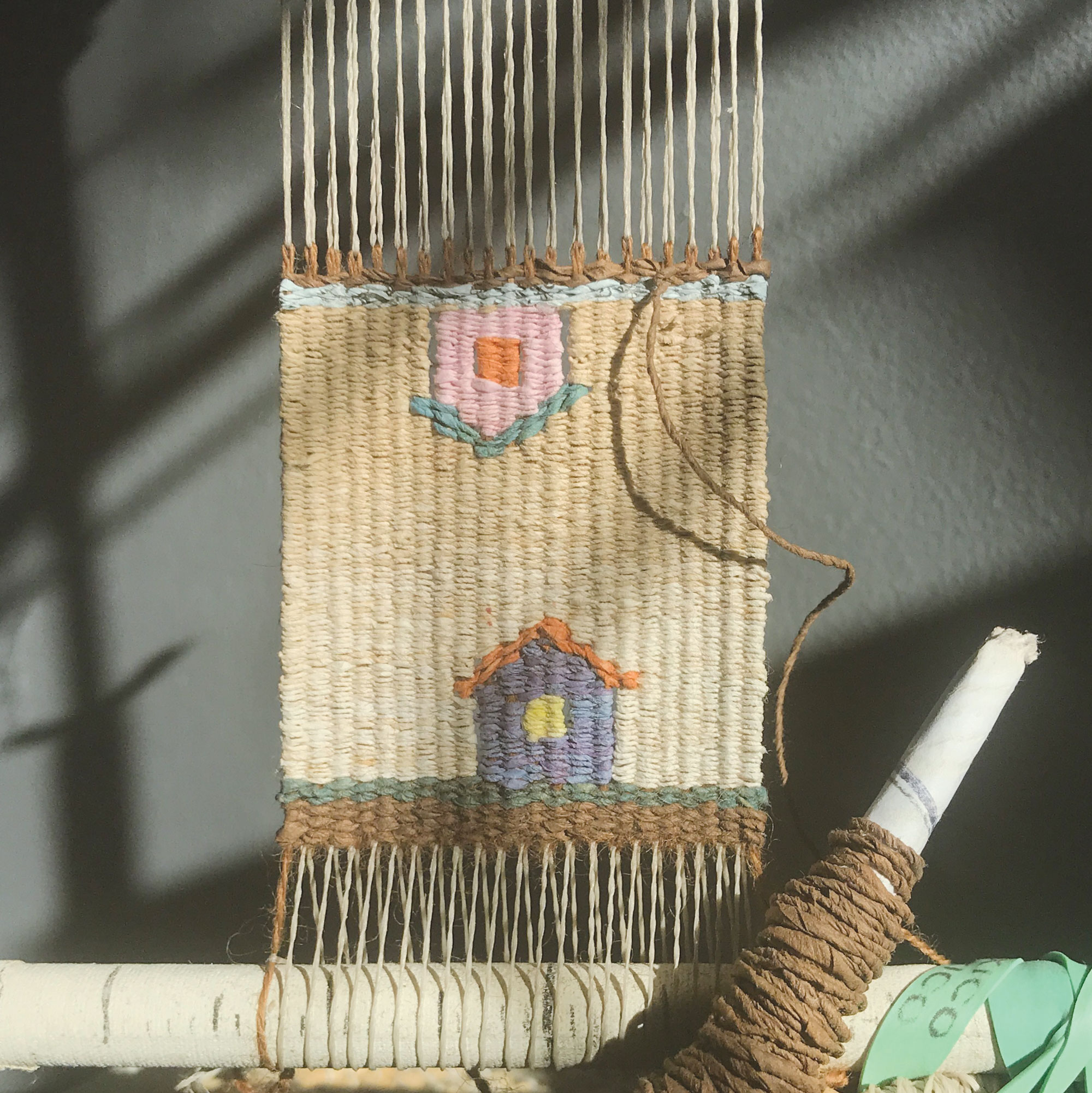 Sarah's fringeless tapestry series often incorporates cordage and coffee-filter yarn in the weft and features little woven houses. The slits in the tapestry allow light to shine through. Photo by Sarah Swett
When Melanie Falick featured Sarah in her 1996 book Knitting in America, she was equally enchanted with knitting, spinning, and weaving; she also pursues stitching and dyeing. Aside from a few years when injury kept her from knitting, it has been a constant companion, and she handspins nearly all of the yarn she uses for both knitting and weaving. But Sarah's most important craft is fiber play: weaving grocery lists into monumental tapestries, weaving iris-leaf cordage into tiny fringeless tapestry book covers, creating balanced plain-weave strips on backstrap looms, and sketching comics of a squirrel and crow weaving those bags around cardboard boxes.
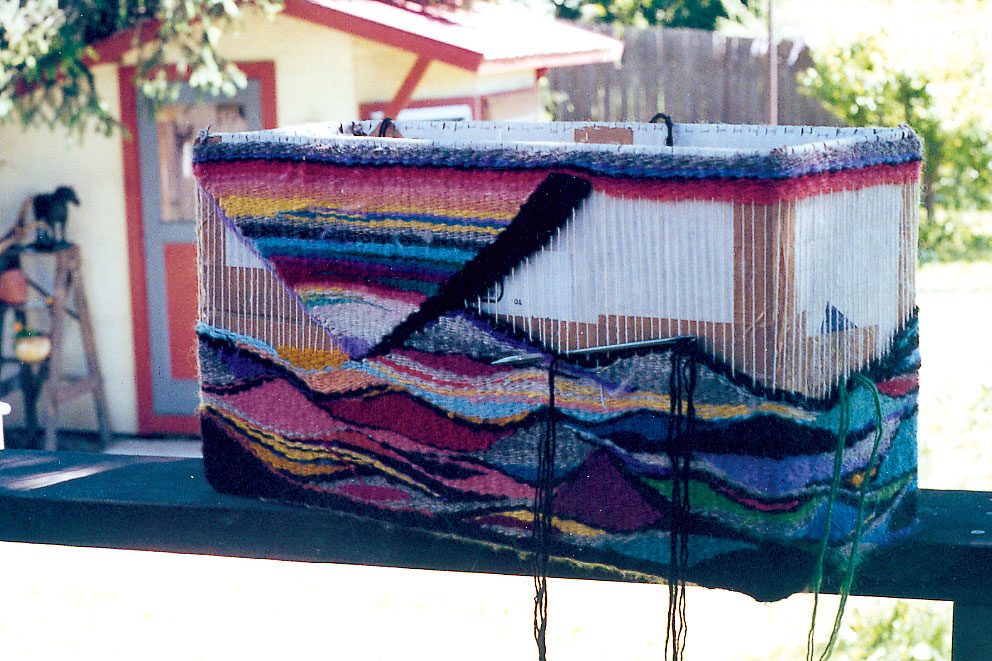
"When is a box not a box?" asked Sarah Swett in her Winter 1997 article in Spin Off. "When it's a loom. Not just any loom, however; a box can be a portable, cheap, three-dimensional, endlessly variable loom." Photo by Sarah Swett
Sarah's tapestries have appeared in dozens of exhibitions, but she prefers not to stray far from home herself. Her Substack newsletter gives readers a weekly peek into her intriguing imagined and real worlds. What she most hopes to share, though, is not her playful approach to her life and art, but permission for others to explore their own. "I would like everyone to be enchanted by their life," she says, "and I would like them to be enchanted by what enchanted by—not what I'm enchanted by."
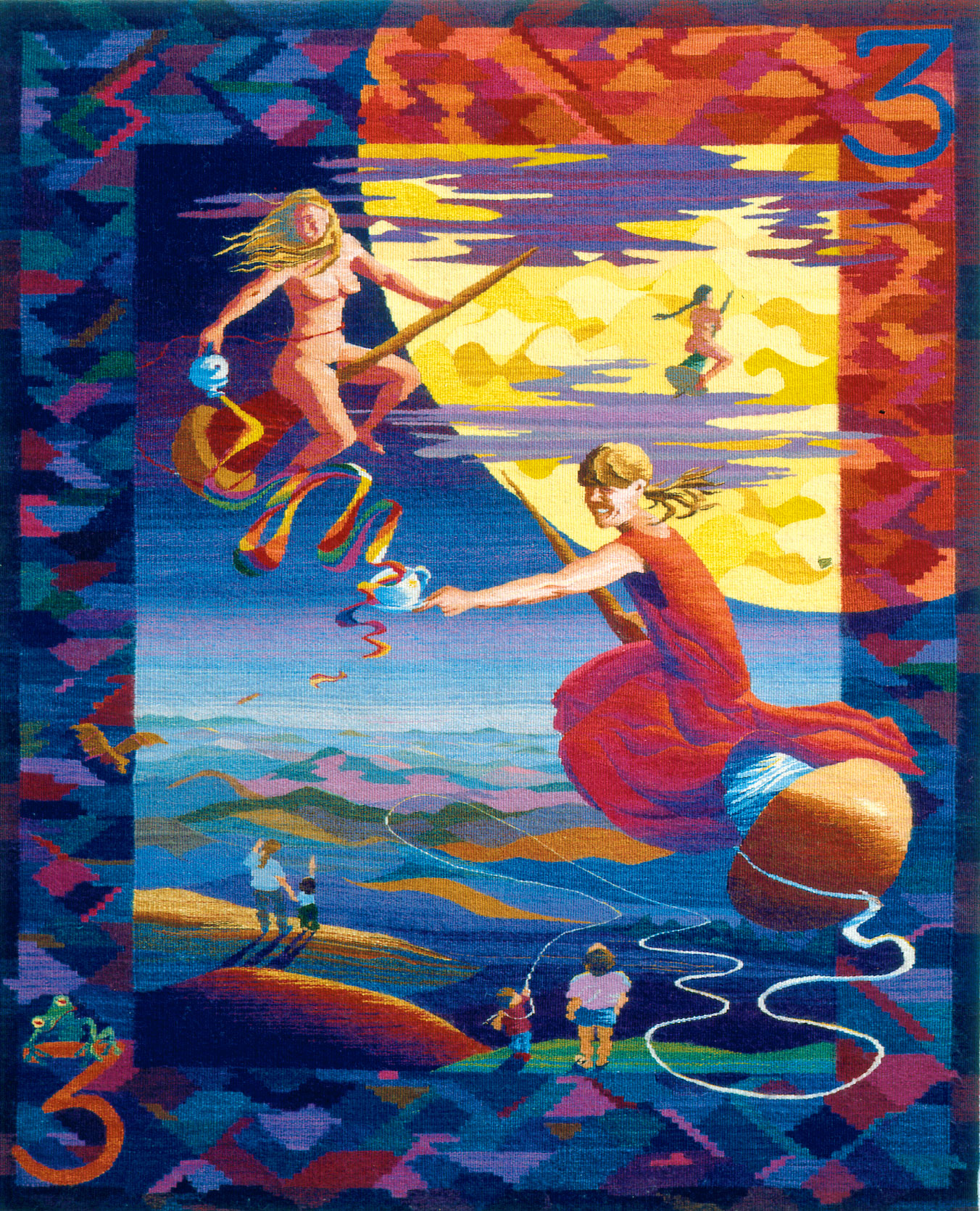 "Three of Spinsters." 1996. 60" X 48" (152 X 122 cm). One of Sarah's handspun, hand-dyed wool tapestries, this piece depicts the artist and two of her handspinning friends. Photo courtesy of Sarah Swett