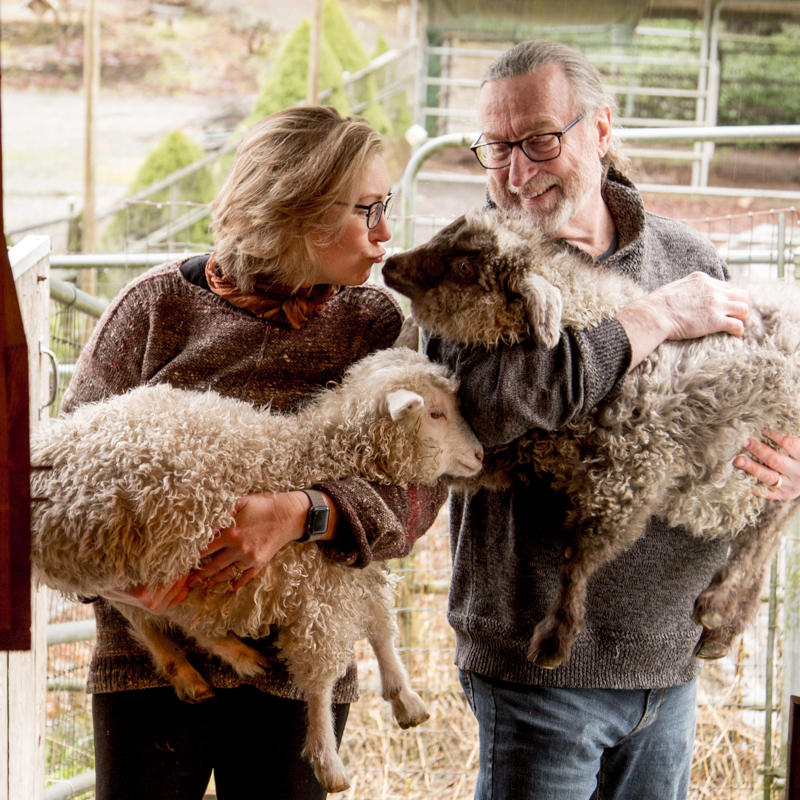
After decades as an art therapist in suburban Sacramento, Lisa Mitchell and her husband, Greg Hudson, were ready for a radical life change. In her rewarding but exhausting career, Lisa spent her days harnessing the power of art and handwork to heal others, but she had little time to do it herself. Their concrete-jungle surroundings felt stifling. It was time for a radical, meaningful life change, one that would bring them more in touch with real materials, real experiences, real presence. They found a farm property in Whidbey Island, Washington, a fiber nexus for weavers, spinners, small mills, and small farms. And they set out in search of the right animals for their fiber farm.
At the Lambtown Festival in Dixon, Greg found them: a mother guanaco and chulengo (baby).
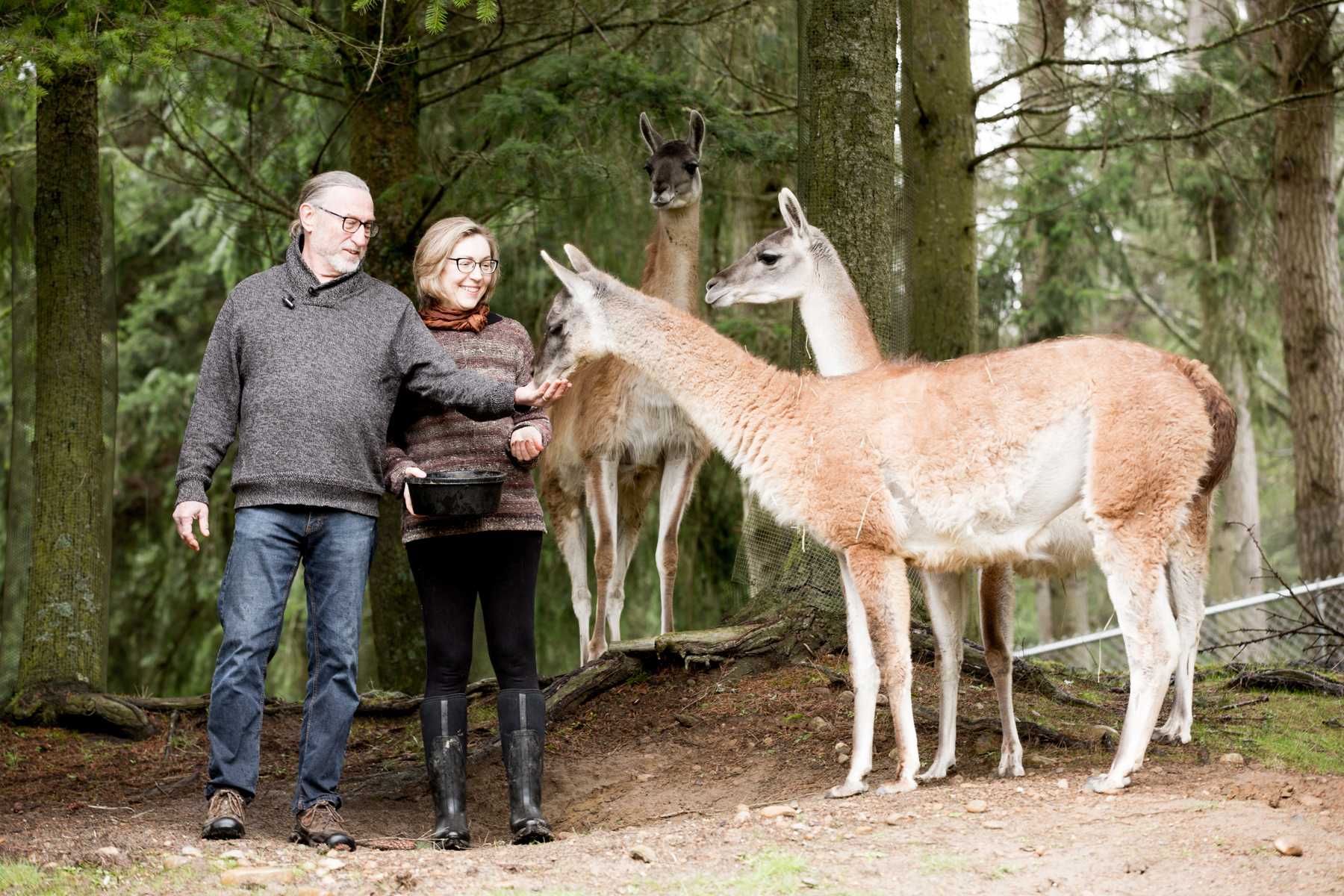
Greg Hudson and Lisa Mitchell started their farm with some of the rarest fiber animals in North America: a small herd of guanacos. Photo courtesy of Lisa Mitchell
Guanacos are probably the least known camelid, the wild ancestor of llamas domesticated in the Andes thousands of years ago. Llamas are not uncommon in North America as pack, fiber, and guard animals, and although not cuddly, they have been bred for generations to be handled and interact with humans. Guanacos have not. Even the descendants of guanacos brought to United States zoos in the 1960s retain the wild nature of their Andean relatives. And unlike their cousins the vicuñas, who have similar huge dark eyes and coat distribution, guanacos are big. Greg and Lisa found themselves with a herd of animals tall enough to look them straight in the eye... but who really don't want to, thank you very much.
Raising guanacos has challenged the couple in more ways than they could have expected, but the lessons learned in the barn and on the farm have brought Greg and Lisa the very real and present life they had hoped to create. Besides the guanacos, they raise pygora goats and angora rabbits on the farm, and a friend raises a small flock of colored Merinos on their behalf. "So, now we raise animals for their fiber and make things with what they grow," Lisa says. "And I write about the discoveries we make along the way."